


US–Iran War 2026: Latest Situation and Global Impact
The conflict between the United States and Iran escalated dramatically on February 28, 2026, when the United States and Israel launched large-scale airstrikes targeting Iranian missile systems, air defenses, and military infrastructure.
3/11/20261 min read
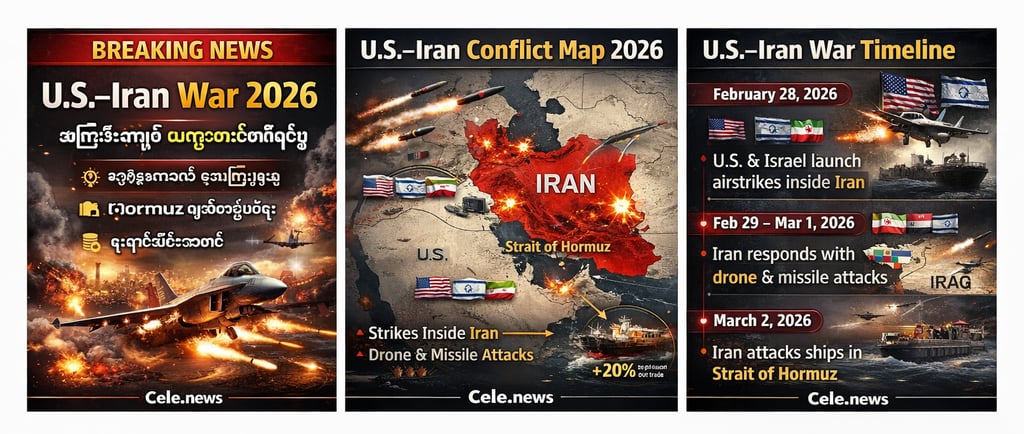
The strikes marked the beginning of one of the most serious military confrontations in the Middle East in decades.
Military escalation
According to U.S. Central Command, thousands of targets inside Iran have been hit since the beginning of the operation.
Iran has responded with missile and drone attacks targeting U.S. allies and infrastructure across the region.
The conflict has also expanded into maritime attacks in the Strait of Hormuz, one of the world’s most important oil shipping routes.
Global oil and economic impact
The Strait of Hormuz carries roughly 20% of the world’s oil supply. Any disruption in this waterway can have severe consequences for global energy markets.
Recent attacks on cargo ships and warnings from Iran about targeting vessels linked to the United States have raised fears of further escalation.
Casualties and military losses
The Pentagon reports that more than 140 U.S. service members have been injured since the start of the conflict, with several fatalities confirmed.
Regional consequences
The war is already spreading across the Middle East, affecting Gulf countries such as the United Arab Emirates and disrupting aviation, oil transport, and international shipping.
Analysts warn that if the conflict continues, it could trigger a wider regional war and cause major instability in global energy markets.